

About the Conference:
Childhood is a critical stage of human development, and advances in pediatric healthcare can have lifelong consequences. The 5th International Conference on Pediatrics and Pediatrics Healthcare 2027 is designed as an international scientific platform for professionals working across clinical pediatrics, pediatric research, child development and healthcare innovation.The conference will provide opportunities to explore new findings, discuss clinical challenges and examine emerging approaches to diagnosis, treatment and prevention. Its multidisciplinary scope allows professionals from different pediatric specialties to exchange knowledge and develop a broader understanding of contemporary child healthcare.
The scientific program will address both established areas of pediatric practice and emerging fields such as precision medicine, genomic diagnostics, artificial intelligence, digital health and technology enabled patient care.The meeting will also encourage discussion around preventive healthcare, nutrition, developmental wellbeing, mental health and health equity, recognizing that improving children's health requires more than treatment alone.Through keynote lectures, invited presentations, oral communications, poster sessions, workshops and networking activities, the conference aims to create an environment where scientific knowledge can be translated into meaningful improvements in pediatric practice.
CONFERENCE OBJECTIVES
- Promote international exchange of pediatric knowledge.
- Highlight advances in diagnosis and treatment.
- Encourage research collaboration.
- Discuss emerging challenges in child healthcare.
- Promote preventive and evidence based pediatric practice.
- Explore the role of technology in pediatric medicine.
- Encourage young researchers and healthcare professionals.
- Strengthen connections between academia, clinical practice and industry.
- Share innovative approaches to child health and development.
BENEFITS OF PARTICIPATION
- Present research to an international scientific audience.
- Learn about emerging developments in pediatric medicine.
- Exchange clinical experiences with healthcare professionals.
- Develop international academic and professional networks.
- Discover new diagnostic and therapeutic approaches.
- Receive feedback on research and clinical work.
- Explore opportunities for research collaboration.
- Improve professional and academic visibility.
- Participate in interactive scientific discussions.
- Connect with healthcare technology and industry representatives.
- Access opportunities for oral, poster and virtual presentations.
- Receive a certificate of participation/presentation where applicable.
WHO SHOULD ATTEND?
- Pediatricians
- Neonatologists
- Pediatric physicians
- Pediatric surgeons
- Pediatric cardiologists
- Pediatric neurologists
- Pediatric oncologists
- Pediatric endocrinologists
- Pediatric gastroenterologists
- Pediatric pulmonologists
- Pediatric nephrologists
- Pediatric infectious disease specialists
- Child psychologists and psychiatrists
- Pediatric nurses
- Nurse practitioners
- Allied healthcare professionals
- Researchers
- Academicians
- Professors
- Medical students
- Residents and fellows
- Public health professionals
- Healthcare administrators
- Pharmaceutical professionals
- Biotechnology professionals
- Medical device companies
- Digital healthcare professionals
SESSIONS & TRACKS
Session 1: Pediatrics and Child Healthcare
This session will examine contemporary approaches to comprehensive healthcare for infants, children and adolescents. It will consider how pediatric services can address changing healthcare needs across different stages of childhood. Discussions will include clinical assessment, common pediatric conditions, prevention and evidence based management. The session will also encourage exchange of practical experiences and approaches that can support better health outcomes for children.
Relevant Topics : General pediatric medicine | Primary pediatric care | Preventive healthcare | Common childhood diseases | Evidence based pediatrics | Growth and development assessment | Family-centered care | Pediatric health promotion | Continuity of pediatric care
Session 2: Advances in Pediatric Medicine
This session will highlight evolving approaches to pediatric diagnosis, treatment and patient management across a range of clinical settings. It will explore how new research and innovations are influencing contemporary pediatric practice. Researchers can present emerging findings, clinical studies and practical advances. Discussions will also consider opportunities for improving individualized and evidence based care.
Relevant Topics: Emerging pediatric therapies | Clinical innovations | Pediatric diagnostics | Precision medicine | Translational pediatric research | Personalized treatment approaches | Advanced therapeutic strategies | Clinical decision-making | Future directions in pediatric medicine
Session 3: Neonatal and Newborn Care
This track focuses on healthcare during the earliest stages of life, from newborn assessment through the management of vulnerable infants. It will address current approaches to monitoring, stabilization and specialized neonatal care. Participants can discuss challenges associated with prematurity, respiratory problems and neonatal infections. The session will also explore developments in screening, intensive care and NICU technologies.
Relevant Topics: Neonatal intensive care | Prematurity | Neonatal respiratory care | Neonatal infections | Newborn screening | NICU technology | Neonatal nutrition | High-risk newborn management | Neonatal developmental follow-up | Neonatal resuscitation
Session 4: Pediatric Cardiology
This session explores developments in the diagnosis and management of cardiovascular conditions affecting infants, children and adolescents. It will address advances in clinical assessment, imaging and specialized cardiac care. Participants can exchange research findings and clinical experiences in pediatric cardiovascular medicine. The session will also consider evolving approaches to intervention, surgery and long term follow up.
Relevant Topics: Congenital heart disease | Pediatric echocardiography | Cardiac imaging | Interventional cardiology | Pediatric cardiac surgery | Long term cardiac care | Pediatric arrhythmias | Heart failure in children | Cardiovascular risk assessment | Pediatric cardiac electrophysiology
Session 5: Pediatric Neurology and Neurodevelopment
This track addresses neurological conditions and developmental challenges that can influence children's health, learning and quality of life. It will explore advances in diagnosis, monitoring and multidisciplinary management. Topics will cover a range of neurological and neurodevelopmental conditions encountered in pediatric practice. Participants can also discuss rehabilitation, supportive care and emerging research directions.
Relevant Topics: Pediatric epilepsy | Neurodevelopmental disorders | Cerebral palsy | Neuromuscular disease | Pediatric neuroimaging | Neurorehabilitation | Pediatric headaches | Movement disorders in children | Neurogenetic conditions | Developmental neurological assessment
Session 6: Pediatric Infectious Diseases
This track focuses on the prevention, diagnosis and treatment of infectious diseases affecting children across different healthcare settings. It will examine current challenges in vaccination, infection control and antimicrobial use. Participants can discuss emerging infections and developments in pediatric infectious disease diagnostics. The session aims to support knowledge exchange around effective prevention and evidence based management.
Relevant Topics: Childhood infections | Vaccination | Antimicrobial resistance | Emerging infections | Infection prevention | Pediatric infectious disease diagnostics | Viral and bacterial infections | Parasitic and tropical infections | Hospital-acquired infections | Global pediatric infection control
Session 7: Pediatric Emergency and Critical Care
This track will address rapid assessment, stabilization and treatment of critically ill or injured children. It will examine approaches used in pediatric emergency departments and intensive care environments. Participants can discuss resuscitation, trauma, shock and continuous clinical monitoring. The session will also highlight evolving practices that support timely and coordinated critical care.
Relevant Topics: Pediatric emergencies | Trauma | Resuscitation | Shock | Pediatric intensive care | Critical care monitoring | Acute respiratory emergencies | Sepsis management | Emergency preparedness | Pediatric poisoning and envenomation
Session 8: Pediatric Nutrition and Growth
This session examines the role of nutrition in supporting healthy growth, development and long term wellbeing during childhood. It will consider nutritional needs across infancy, childhood and adolescence. Participants can discuss breastfeeding, complementary feeding, micronutrients, and malnutrition and childhood obesity. The session will also explore practical approaches to nutritional assessment and early intervention.
Relevant Topics: Infant nutrition | Breastfeeding | Complementary feeding | Micronutrients | Childhood obesity | Malnutrition | Growth assessment | Nutritional deficiencies | Healthy eating and lifestyle | Pediatric feeding difficulties | Clinical nutrition assessment
Session 9: Pediatric Gastroenterology and Hepatology
This track focuses on gastrointestinal, nutritional and liver disorders affecting infants, children and adolescents. It will explore advances in assessment, diagnosis and management of common and complex pediatric conditions. Participants can share clinical experiences and research findings across gastroenterology and hepatology. Emerging areas such as endoscopy and the gut microbiome will also be discussed.
Relevant Topics: Pediatric gastrointestinal disorders | Inflammatory bowel disease | Celiac disease | Pediatric liver disorders | Endoscopy | Gut microbiome | Functional gastrointestinal disorders | Food intolerance and malabsorption | Hepatobiliary disorders | Pediatric gastrointestinal imaging
Session 10: Pediatric Pulmonology and Respiratory Medicine
This track will explore respiratory health across infancy, childhood and adolescence, with attention to both acute and chronic conditions. It will examine developments in diagnosis, treatment and long term respiratory management. Participants can discuss asthma, infections, chronic lung disease and pediatric sleep related conditions. The session will also consider advances in respiratory diagnostics and non invasive support.
Relevant Topics : Childhood asthma | Respiratory infections | Chronic lung disease | Pediatric sleep disorders | Respiratory diagnostics | Non invasive ventilation | Cystic fibrosis | Pediatric airway disorders | Long-term respiratory care | Pediatric respiratory rehabilitation
Session 11: Pediatric Hematology and Oncology
This track focuses on blood disorders and childhood cancers, including evolving approaches to diagnosis, treatment and long term care. It will bring together perspectives from pediatric hematology, oncology and related research fields. Participants can discuss leukemia, lymphoma, solid tumors and inherited blood disorders. The session will also examine precision approaches and survivorship in pediatric cancer care.
Relevant Topics: Childhood leukemia | Pediatric lymphoma | Solid tumors | Hemoglobin disorders | Precision oncology | Cancer survivorship | Bone marrow disorders | Pediatric transfusion medicine | Supportive cancer care | Pediatric cancer genetics
Session 12: Pediatric Endocrinology and Metabolism
This track addresses hormonal, growth and metabolic disorders that can affect children at different stages of development. It will explore advances in diagnosis, monitoring and individualized treatment. Participants can discuss diabetes, thyroid disorders, growth abnormalities, puberty related conditions and obesity. The session will also consider emerging approaches to metabolic disease management and prevention.
Relevant Topics: Pediatric diabetes | Thyroid disorders | Growth abnormalities | Puberty disorders | Obesity | Metabolic diseases | Adrenal disorders | Calcium and bone metabolism | Hormonal disorders in childhood | Inborn errors of metabolism
Session 13: Pediatric Allergy and Immunology
This session explores allergic, immune and autoimmune conditions affecting infants, children and adolescents. It will examine advances in recognizing, investigating and managing complex immune related disorders. Participants can discuss allergy diagnostics, immunodeficiency, autoimmune disease and common pediatric allergies. The session will also provide a platform for sharing developments in immunotherapy and patient centered care.
Relevant Topics: Food allergies | Drug allergies | Immunodeficiency | Autoimmune disorders | Allergy diagnostics | Immunotherapy | Atopic diseases | Eosinophilic disorders | Pediatric immune disorders | Food allergy management
Session 14: Pediatric Nephrology and Urology
This track focuses on kidney, urinary and congenital urological conditions encountered in pediatric practice. It will examine approaches to early recognition, diagnosis and long term management. Participants can discuss renal disease, childhood hypertension, urinary disorders and congenital conditions. The session will also explore developments in pediatric urology and renal replacement therapies.
Relevant Topics: Pediatric kidney disease | Childhood hypertension | Urinary disorders | Congenital renal conditions | Pediatric urology Renal replacement therapy | Glomerular diseases | Pediatric urinary tract disorders | Kidney function assessment | Congenital urological abnormalities
Session 15: Pediatric Surgery
This track will highlight surgical innovations and evolving approaches to the care of infants and children requiring operative treatment. It will address both common pediatric procedures and complex congenital and neonatal conditions. Participants can discuss minimally invasive techniques, anesthesia and perioperative management. The session will also provide opportunities to exchange experiences in improving surgical safety and recovery.
Relevant Topics: Pediatric surgery | Neonatal surgery | Congenital abnormalities | Minimally invasive surgery | Pediatric anesthesia |Perioperative care | Thoracic and abdominal surgery | Surgical management | pediatric emergencies | Postoperative pediatric care | Pediatric surgical oncology
Session 16: Child Development and Mental Health
This session will explore cognitive, emotional, behavioral and social wellbeing across childhood and adolescence. It will consider developmental differences and challenges that may affect learning, relationships and daily functioning. Participants can discuss autism, ADHD, developmental delay, behavioral conditions and child psychology. The session will also address adolescent mental health and the importance of early, supportive intervention.
Relevant Topics: Autism | ADHD | Developmental delay | Behavioral disorder | Child psychology | Adolescent mental health | Learning disabilities | Academic difficulties | Childhood anxiety | Social and emotional development | Early intervention
Session 17: Pediatric Genetics and Rare Diseases
This track explores advances in genetic diagnosis and individualized approaches to rare and complex pediatric conditions. It will examine how genomic and molecular technologies are improving understanding of childhood disorders. Participants can discuss genetic testing, counseling, rare disease diagnosis and personalized care. The session will also consider opportunities and challenges in integrating genomic medicine into pediatric practice.
Relevant Topics: Genomic medicine | Rare diseases | Genetic testing | Molecular diagnostics | Genetic counseling | Personalized pediatric care | Inherited disorders | Genotype-phenotype assessment | Emerging genomic technologies | Genetic variant interpretation
Session 18: Adolescent Medicine
This track focuses on the evolving healthcare needs of adolescents and the transition from pediatric to adult services. It will address physical, nutritional, emotional and preventive health during this important stage of development. Participants can discuss puberty, mental health, nutrition and adolescent focused care. The session will also explore approaches that support continuity of care during transition.
Relevant Topics: Adolescent health | Puberty | Nutrition | Mental health | Preventive care | Transition medicine | Sexual and reproductive health | Substance use prevention | Health promotion in adolescents | Adolescent preventive screening
Session 19: Digital Pediatrics and Artificial Intelligence
This track explores the growing influence of digital technologies and artificial intelligence on pediatric healthcare. It will examine how digital tools can support diagnosis, monitoring, communication and clinical decision making. Participants can discuss telemedicine, remote monitoring, wearable technologies and AI assisted approaches. The session will also consider responsible, child centered implementation of emerging technologies.
Relevant Topics: AI assisted diagnosis | Digital health | Telemedicine | Remote monitoring | Wearable technologies | Clinical decision support | Digital patient records | Pediatric health applications | Ethical and responsible AI | Cybersecurity in pediatric health
Session 20: Preventive Pediatrics and Global Child Health
This track addresses strategies for reducing preventable disease and improving access to quality healthcare for children worldwide. It will examine the role of immunization, health promotion, school health and community based services. Participants can discuss health equity and challenges affecting children across different populations and settings. The session will also highlight approaches that support stronger global child health systems.
Relevant Topics: Immunization | Child health promotion | School health | Health equity | Community healthcare | Global child health | Disease prevention | Maternal and child health | Public health strategies | School-based preventive programs
Visa Assistance
The conference team is pleased to support international participants with their travel preparations. Registered participants who require a visa invitation letter may request the necessary documentation to support their visa application.
Participants are advised to apply well in advance and check the latest requirements with the relevant embassy or consulate. Visa approval is subject to the decision of the respective immigration authorities.
Market Analysis:
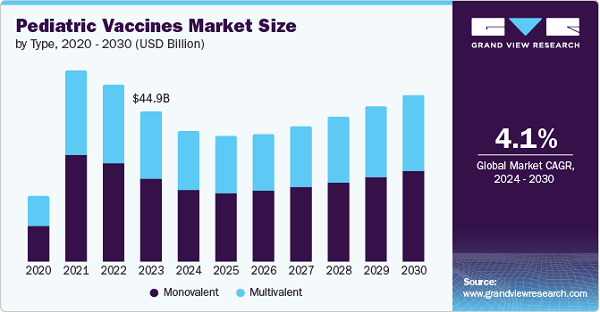
The global pediatric vaccines market size was valued at USD 44.9 billion in 2023 and is projected to grow from USD 38.1 billion in 2026 to USD 49.5 billion by 2030, at a CAGR of 4.1% from 2024 to 2030. North America dominated the market, accounting for a revenue share of 42.7% in 2023. This is due to increased awareness of the benefits of vaccines worldwide, resulting in higher demand for childhood vaccines. Furthermore, the increasing prevalence of chronic diseases such as respiratory infections among children requires more specialized vaccines, and, in addition, government programs and subsidies for their protection policies in developing countries are anticipated to drive market growth.
Advancement in new and better types of vaccines such as conjugate vaccines and recombinant vaccines proves to be more safe and effective for children. It creates trust in vaccines thus making their use more prevalent. There is a substantial increase in economic growth, especially of the emerging economies, due to which families are able to save more and therefore spend more on preventative measures such as child immunizations.
Previous Pediatrics and Pediatrics Healthcare Conference:
Longdom Conferences has previously provided an international platform for pediatricians, researchers, clinicians, academicians, healthcare professionals, students, and industry representatives to exchange knowledge and discuss developments in pediatric medicine and child healthcare.Previous scientific discussions have covered areas including pediatric medicine, neonatal care, pediatric cardiology, pediatric surgery, child development, pediatric nutrition, infectious diseases, pediatric research, growth and development, and emerging approaches to child healthcare.The conferences have provided opportunities for participants to present research findings, engage in scientific discussions, share clinical experiences, establish professional connections, and explore collaborations across pediatrics and related healthcare disciplines.Building on these scientific discussions, Longdom Conferences continues to provide a global platform for exploring emerging discoveries, innovative treatments, advanced diagnostics, preventive strategies, and future directions in Pediatrics and Pediatrics Healthcare.