

About the Conference
The International Conference on Anesthesia and Pain Medicine will be held on November 18, 19 in Dubai UAE . This conference brings together leading anesthesiologists, pain specialists, researchers, and healthcare professionals to share knowledge, explore innovations, and discuss the latest advancements in anesthesia, perioperative care, and pain management.
The program includes keynote lectures, scientific sessions, workshops, and panel discussions covering topics such as modern anesthetic techniques, regional and critical care anesthesia, acute and chronic pain management, and emerging technologies.
Reasons to Join
Participating in the International Conference on Anesthesia and Pain Medicine 2026 offers a unique opportunity for professionals in anesthesia, pain management, and perioperative care to:
- Gain insights into the latest research, innovations, and advancements in anesthesia and pain medicine.
- Explore cutting-edge technologies and techniques shaping the future of perioperative care and pain management.
- Network with leading clinicians, researchers, and industry experts from around the world.
- Earn continuing education credits and support your professional development.
- Engage in interactive discussions, case studies, and collaborative sessions designed to inspire new approaches.
- Stay updated on emerging trends, best practices, and evolving strategies in anesthesia and pain care.
Target Audience
The International Conference on Anesthesia and Pain Medicine is designed for a diverse range of professionals involved in anesthesia, perioperative care, and pain management, including:
- Anesthesiologists and pain medicine specialists
- Critical care physicians and perioperative clinicians
- Surgeons and surgical teams
- Nurse anesthetists and perioperative nursing professionals
- Researchers and academicians in anesthesiology and pain medicine
- Medical students, residents, and fellows interested in anesthesia and pain care
- Healthcare administrators and hospital decision-makers
- Medical device and pharmaceutical industry professionals
- Professionals involved in pain management, regional anesthesia, and chronic pain care.
Scientific Sessions and Tracks
Track 1: Innovative Anesthetic Devices
This track highlights advancements in medical devices and technology for anesthesia, including ventilators, infusion pumps, monitoring systems, airway tools, and digital solutions. It focuses on innovations that enhance efficiency, precision, patient monitoring, and perioperative safety, offering insights into emerging trends and clinical applications.
Anesthetic devices | Ventilators | Infusion pumps | Airway management tools | Monitoring systems | Anesthesia workstations | Perioperative technology | Patient safety | Digital anesthesia solutions | Smart devices | Innovation in anesthesia | Medical device advancements
Track 2: Obstetric and Maternal Anesthesia
This track covers anesthesia care in pregnancy, labor, and cesarean delivery, focusing on maternal and fetal safety. It includes regional anesthesia, labor pain management, high-risk pregnancy care, and perioperative strategies, highlighting innovations in monitoring, risk assessment, and multidisciplinary approaches to optimize outcomes.
Obstetric anesthesia | Maternal anesthesia | Labor analgesia | Epidural anesthesia | Spinal anesthesia | Cesarean section anesthesia | High-risk pregnancy | Fetal monitoring | Perioperative care | Maternal safety | Pain management in labor | Multidisciplinary anesthesia care
Track 3: Emergency and Trauma Anesthesia
This track addresses anesthesia management in emergency and critical care, including trauma surgery and urgent procedures. It covers rapid assessment, airway management, hemodynamic stabilization, resuscitation, and perioperative strategies, emphasizing best practices, innovations, and multidisciplinary collaboration for safe and effective care.
Emergency anesthesia | Trauma anesthesia | Rapid assessment | Airway management | Hemodynamic stabilization | Resuscitation techniques | Perioperative care | Critical care anesthesia | Life-threatening conditions
Track 4: Neuroanesthesia and Critical Care
This track covers anesthesia for neurosurgery and care of critically ill neurological patients. It includes perioperative strategies, advanced monitoring, intracranial pressure management, neuroprotective techniques, and postoperative care, highlighting innovations and best practices to ensure patient safety and optimal outcomes.
Neuroanesthesia | Neurosurgical anesthesia | Critical care | Brain surgery anesthesia | Spinal surgery anesthesia | Intracranial pressure management | Neuroprotective strategies | Perioperative care | ICU neurocritical care
Track 5: Orthopedic and Spine Anesthesia
This track focuses on anesthesia techniques and perioperative management for orthopedic and spinal surgeries. It covers regional anesthesia approaches such as nerve blocks and epidural anesthesia, multimodal pain management strategies, perioperative care, patient safety, and enhanced recovery protocols. The track also highlights innovations, best practices, and clinical strategies to optimize outcomes, reduce complications, and improve postoperative pain control for orthopedic and spine surgery patients.
Orthopedic anesthesia | Spine surgery anesthesia | Regional anesthesia | Nerve blocks | Epidural anesthesia | Perioperative care | Pain management | Multimodal analgesia | Enhanced recovery protocols | Patient safety | Surgical anesthesia techniques | Postoperative care
Track 6: Chronic Pain and Rehabilitation
This track focuses on comprehensive approaches to managing chronic pain and improving patient quality of life. It covers multidisciplinary pain management strategies, pharmacological and non-pharmacological treatments, interventional procedures, neuromodulation techniques, and rehabilitation programs. The track emphasizes evidence-based practices, patient-centered care, and innovations in managing complex chronic pain conditions to optimize functional recovery and enhance overall well-being.
Chronic pain management | Pain rehabilitation | Multidisciplinary care | Interventional pain procedures | Neuromodulation | Patient-centered pain care | Pharmacological treatments | Non-pharmacological therapies | Functional recovery | Pain clinics | Quality of life improvement | Evidence-based pain management
Track 7: Ultrasound-Guided Anesthesia
This track focuses on the use of ultrasound and imaging techniques to enhance the safety, precision, and effectiveness of anesthesia delivery. It covers regional anesthesia, nerve blocks, vascular access, airway management, and procedural guidance using ultrasound. The track highlights innovations, best practices, and clinical applications that improve patient outcomes, reduce complications, and support perioperative efficiency.
Ultrasound-guided anesthesia | Regional anesthesia | Nerve blocks | Vascular access | Airway management | Imaging in anesthesia | Perioperative guidance | Procedural safety | Precision anesthesia | Clinical innovations | Minimally invasive anesthesia | Patient outcomes
Track 8: Personalized Anesthesia
This track focuses on personalized anesthesia care, optimizing outcomes through patient-specific strategies. It covers preoperative assessment, pharmacogenomics, individualized drug dosing, risk stratification, and tailored perioperative management, emphasizing innovations and evidence-based approaches for safe, effective, and patient-centered anesthesia..
Personalized anesthesia | Precision anesthesia | Patient-centered care | Pharmacogenomics | Individualized dosing | Perioperative management | Risk stratification | Anesthesia outcomes | Tailored anesthesia strategies | Patient safety | Clinical innovations | Evidence-based anesthesia
Track 9: Anesthesia for Special Surgeries
This track covers anesthesia for complex, high-risk surgeries, including cardiac, thoracic, orthopedic, obstetric, laparoscopic, and transplant procedures. It highlights perioperative planning, monitoring, risk management, and postoperative care, emphasizing best practices, innovations, and multidisciplinary approaches to ensure safety and optimal outcomes.
Specialty surgery anesthesia | Cardiac anesthesia | Thoracic anesthesia | Obstetric anesthesia | Orthopedic anesthesia | Laparoscopic anesthesia | Transplant anesthesia | High-risk surgery | Perioperative care | Patient safety | Multidisciplinary anesthesia | Complex surgical management
Track 10: Clinical Standards in Anesthesia
The Clinical Standards in Anesthesia track focuses on improving patient safety, care quality, and adherence to evidence-based guidelines in anesthesia practice. It covers clinical protocols, safety checklists, risk management, quality improvement initiatives, and compliance with national and international standards. This track emphasizes best practices, benchmarking, and strategies to enhance perioperative outcomes and ensure consistent, high-quality anesthesia care across diverse clinical settings.
Clinical standards | Anesthesia guidelines | Patient safety | Quality improvement | Perioperative care | Evidence-based anesthesia | Risk management | Best practices | Protocol compliance | Safety checklists | Benchmarking | Clinical excellence
Track 11: Spine and Orthopedic Anesthesia
This track focuses on anesthesia management and perioperative care for patients undergoing spine and orthopedic surgeries. It covers regional anesthesia techniques such as nerve blocks and epidurals, multimodal pain management, perioperative monitoring, and enhanced recovery protocols. The track emphasizes evidence-based practices, patient safety, and innovations aimed at optimizing surgical outcomes and improving postoperative pain control for orthopedic and spinal procedures.
Spine anesthesia | Orthopedic anesthesia | Regional anesthesia | Nerve blocks | Epidural anesthesia | Pain management | Multimodal analgesia | Perioperative care | Enhanced recovery protocols | Patient safety | Surgical anesthesia techniques | Postoperative outcomes
Track 12: Perioperative Pharmacology
This track covers pharmacology and drug management in anesthesia and perioperative care, including anesthetics, analgesics, sedatives, muscle relaxants, and adjuvants. It emphasizes drug safety, dosing, interactions, and patient-specific considerations, highlighting evidence-based practices and strategies to optimize efficacy and patient outcomes.
Perioperative pharmacology | Anesthetic agents | Analgesics | Sedatives | Muscle relaxants | Adjuvant medications | Drug safety | Patient-specific dosing | Pharmacokinetics | Drug interactions | Evidence-based anesthesia | Perioperative care
Track 13: Multimodal Analgesia Strategies
This track focuses on combining different analgesic techniques and medications to optimize pain control while minimizing side effects. It covers opioid-sparing strategies, regional anesthesia, non-opioid analgesics, adjuvant therapies, and perioperative pain management protocols. The track emphasizes evidence-based approaches, innovations, and best practices to improve patient comfort, enhance recovery, and reduce complications associated with postoperative pain.
Multimodal analgesia | Pain management | Opioid-sparing strategies | Regional anesthesia | Non-opioid analgesics | Adjuvant therapies | Postoperative pain control | Perioperative analgesia | Enhanced recovery | Patient-centered pain management | Evidence-based pain strategies | Pain protocols
Track 14: Safe Opioid Prescribing
This track focuses on strategies for responsible opioid use in anesthesia and pain management. It covers guidelines for prescribing opioids, risk assessment, patient monitoring, opioid-sparing approaches, and strategies to prevent misuse, dependency, and adverse effects. The track emphasizes evidence-based practices, regulatory compliance, and multidisciplinary approaches to ensure safe and effective pain management while minimizing risks associated with opioid therapy.
Opioid prescribing | Safe opioid use | Pain management | Risk assessment | Opioid-sparing strategies | Patient monitoring | Dependency prevention | Adverse effect management | Evidence-based guidelines | Regulatory compliance | Responsible opioid use | Multidisciplinary pain care
Track 15: Education & Training
This track focuses on advancing knowledge, skills, and professional growth in anesthesia and pain medicine. It covers simulation-based learning, workshops, skill development, residency and fellowship training, continuing medical education (CME), mentorship programs, and strategies for lifelong learning. The track emphasizes innovative teaching methods, competency-based education, and approaches to enhance clinical expertise and patient care outcomes.
Anesthesia education | Training programs | Skill development | Simulation-based learning | Workshops | Continuing medical education (CME) | Residency training | Fellowship programs | Professional growth | Mentorship | Competency-based education | Lifelong learning
Track 16: Tele-Anesthesia
This track focuses on the use of telemedicine, remote monitoring, and digital technologies to enhance anesthesia care. It covers remote patient assessment, virtual perioperative consultations, telemonitoring during procedures, and integration of digital health solutions in anesthesia practice. The track highlights innovations, best practices, and evidence-based approaches that improve patient safety, accessibility, and efficiency in perioperative and pain management settings.
Tele-anesthesia | Remote anesthesia monitoring | Digital health | Telemedicine in anesthesia | Virtual consultations | Perioperative telecare | Patient monitoring | Remote patient assessment | Clinical innovations | Technology in anesthesia | Evidence-based telehealth | Perioperative efficiency
Track 17: Cardiac and Thoracic Anesthesia
This track covers anesthesia for cardiac and thoracic surgeries, including perioperative planning, advanced monitoring, hemodynamic management, cardiopulmonary bypass, pain control, and postoperative care. It emphasizes evidence-based practices, innovations, and multidisciplinary approaches to ensure patient safety and optimal surgical outcomes.
Cardiac anesthesia | Thoracic anesthesia | Perioperative care | Hemodynamic management | Cardiopulmonary bypass | Pain management | Advanced monitoring | High-risk surgery | Postoperative care | Multidisciplinary anesthesia | Patient safety | Surgical outcomes
Track 18: Pediatric and Geriatric Anesthesia
This track covers anesthesia care for children and elderly patients, focusing on age-specific techniques, perioperative assessment, pain management, sedation, and safety. It emphasizes best practices, innovations, and evidence-based approaches to ensure safe, effective, and patient-centered care for these populations.
Pediatric anesthesia | Geriatric anesthesia | Age-specific anesthesia | Perioperative assessment | Pain management | Sedation protocols | Patient safety | Clinical considerations | Postoperative care | Evidence-based anesthesia | Pediatric pain care | Elderly patient anesthesia
Track 19: Pain Management in Cancer Patients
This track focuses on strategies to manage acute and chronic pain in oncology patients. It covers pharmacological treatments, opioid and non-opioid analgesics, interventional procedures, palliative care approaches, and multidisciplinary pain management. The track emphasizes evidence-based practices, patient-centered care, and innovations aimed at improving quality of life, reducing suffering, and optimizing functional outcomes for patients undergoing cancer treatment.
Cancer pain management | Oncology anesthesia | Palliative care | Acute and chronic pain | Opioid therapy | Non-opioid analgesics | Interventional pain procedures | Multidisciplinary care | Patient-centered pain management | Quality of life improvement | Pain control strategies
Track 20: Behavioral Pain Management
This track covers psychological and behavioral approaches to managing acute and chronic pain, including CBT, mindfulness, stress reduction, biofeedback, and other non-drug interventions. It emphasizes evidence-based, patient-centered, and multidisciplinary strategies to improve pain control, function, and quality of life.
Behavioral pain management | Pain psychology | Cognitive-behavioral therapy (CBT) | Mindfulness | Stress reduction | Biofeedback | Non-pharmacological pain interventions | Chronic pain care
Participation Options
The International Conference on Anesthesia and Pain Medicine offers multiple opportunities for participation, organized into Academic, Student, and Industry categories.
- Keynote Speaker: 45–50 minutes
- Oral Presentation: 25–30 minutes (individual presenters only)
- Workshop: 45–50 minutes (multiple presenters allowed)
- Special Session: 45–50 minutes (multiple presenters allowed)
- Symposium: Over 45 minutes (multiple presenters allowed)
- Delegate Registration: Full access to all sessions, workshops, and conference benefits
- Poster Presenter: Opportunity to present a poster along with full delegate benefits
- Remote Attendance: Participate virtually via live streaming, video presentation, or e-poster
- Exhibitor: Showcase medical devices, anesthesia equipment, or related products through various booth sizes
- Media Partner / Sponsor / Collaborator: Engage in conference promotion, sponsorship opportunities, and strategic collaborations
Benefits of Participation
Benefits for Speakers
- Publication of accepted abstracts in peer-reviewed anesthesia and pain medicine journals
- Global exposure for your research among leading experts
- Opportunities for career growth and professional development
- Access to the latest innovations and technologies in anesthesia and pain medicine
- Networking with international professionals to build collaborations
- Promote research through conference materials and digital platforms
- Explore interdisciplinary topics including critical care, regional anesthesia, chronic pain, and emerging technologies
Benefits for Delegates
- Broaden your knowledge and enhance your professional expertise in anesthesia, perioperative care, and pain management.
- Reignite your passion through engaging scientific sessions, workshops, and interactive discussions.
- Explore and support innovative approaches aimed at improving patient safety, surgical outcomes, and pain management strategies.
- Connect and network with leading anesthesiologists, pain specialists, critical care physicians, researchers, and healthcare professionals from around the world
Benefits for Sponsors
- Enhance brand visibility and recognition in the global anesthesia, perioperative care, and pain management industry.
- Showcase your latest products, technologies, and services to a targeted international audience of clinicians, researchers, and healthcare professionals.
- Generate high-quality leads and unlock new business growth and partnership opportunities.
- Build strong relationships with industry leaders, decision-makers, and key opinion leaders.
- Participate in insightful discussions to refine strategies and stay aligned with emerging trends in anesthesia and pain medicine.
- Benchmark your solutions against leading organizations to remain competitive and innovative.
- Gain practical insights and solutions to organizational challenges through direct engagement with experts and stakeholders.
Elite Sponsor Benefits
- Sponsor 10 Poster Presentation Awards at the conference
- Three corporate workshops with full audio-visual support
- Two complimentary 3×3 sqm exhibition booths with priority location
- Four complimentary conference registrations for sponsor representatives
- Logo visibility on the conference website, sponsorship page, and journal platforms
- One full-page color ad in the program or abstract book
- Three promotional inserts in delegate bags
- One post-conference email to attendees (content approved)
- Exclusive promotion on official conference social media
- 20% discount on sponsorship for next year’s conference
Gold Sponsor Benefits
- Opportunity to sponsor 5 Poster Presentation Awards at the Anesthesia and Pain Medicine Conference.
- Two corporate-sponsored workshop slots, including catering and full audio-visual support (subject to deadlines).
- One complimentary exhibition booth (3×3 sqm) with priority location selection.
- Three complimentary conference registrations for sponsor representatives.
- Prominent logo visibility on the conference website homepage and sponsorship page.
- One full-page color advertisement in the conference program or abstract book (excluding cover pages).
- Two promotional inserts supplied by the sponsor included in delegate bags.
- Exclusive online promotion across official conference social media platforms.
- Receive a 15% discount on sponsorship for any future conference organized next year.
Silver Sponsor Benefits
- Opportunity to sponsor 3 Poster Presentation Awards at the Anesthesia and Pain Medicine Conference.
- Two complimentary conference registrations for sponsor representatives.
- One corporate-sponsored workshop slot, including catering and full audio-visual support (subject to deadlines).
- One complimentary exhibition booth (3×3 sqm) with priority location selection.
- Logo visibility on the conference sponsorship page of the official website.
- One full-page color advertisement in the conference program or abstract book (excluding cover pages).
- One promotional insert supplied by the sponsor included in delegate bags.
- Priority access to purchase additional sponsorship opportunities.
- Exclusive online promotion across all official conference social media platforms.
- Enjoy a 10% discount on sponsorship for any future conference organized next year.
Market Analysis Report
The global anesthesia and pain medicine market is growing strongly, driven by rising surgical volumes, an aging population, and demand for advanced pain management solutions. The pain management drugs market is expected to rise from USD 87 billion in 2025 to around USD 125–126 billion by 2034 (~4.1 % CAGR). The anesthesia devices market, including workstations, monitors, and ventilators, is projected to grow from USD 18.98 billion to USD 39.97 billion (~8.6 % CAGR). Anesthetic drugs are expected to expand from USD 6.8–10.6 billion to USD 12–15 billion (~3.5–5.1 % CAGR), while digital solutions and anesthesia information management systems (AIMS) may grow over 8 % CAGR with AI and telemedicine integration. Key drivers include technological innovations, non-opioid pain strategies, and emerging market expansion, underscoring the sector’s clinical and economic significance. 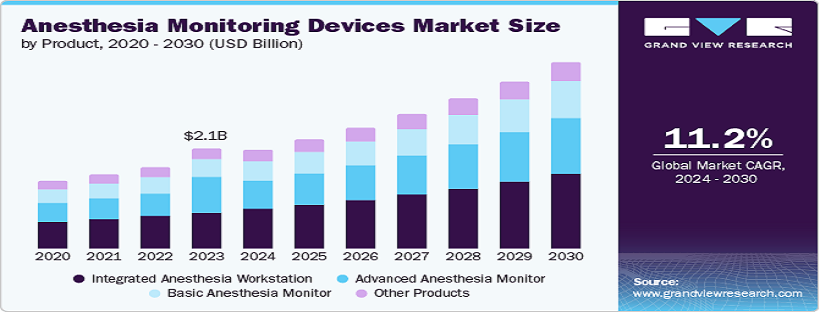
The global anesthesia monitoring devices market size was valued at USD 2.1 billion in 2023 and is projected to grow from USD 2.8 billion in 2026 to USD 4.3 billion by 2030, at a CAGR of 11.2% from 2024 to 2030. North America dominated the market, accounting for a revenue share of 36.1% in 2023. This surge can be attributed to the rising number of surgical procedures worldwide. Geriatric patients suffering from chronic conditions including heart disease and cancer often require general anesthesia, driving the widespread adoption of anesthesia monitoring devices. These devices help monitor physiological parameters such as heart rate, blood pressure, oxygen saturation, and end-tidal carbon dioxide levels, enhancing patient outcomes.