


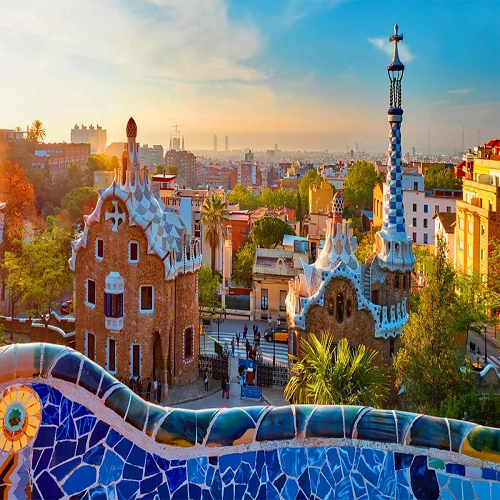


Madrid is the capital and most populous city of Spain. The city has almost inhabitants and a metropolitan area population of approximately 7 million. It is the second-largest city in the European Union (EU), and its monocentric metropolitan area is the second-largest in the municipality covers 604.3 km2 (233.3 sq. mi) geographical areas. Madrid lies on the River Manzanares in the central part of the Iberian Peninsula at about 650 meters above mean sea level. The capital city of both Spain and the surrounding autonomous community of Madrid (since 1983), it is also the political, economic, and cultural centre of the country. The climate of Madrid features hot summers and cool winters.
The Madrid urban agglomeration has the second-largest GDP in the European Union, and its influence in politics, education, entertainment, environment, media, fashion, science, culture, and the arts all contribute to its status as one of the world's major global cities. Due to its economic output, high standard of living, and market size, Madrid is considered the major financial centre and the leading economic hub of the Iberian Peninsula and of Southern Europe. The metropolitan area hosts major Spanish companies such as Telefónica, Iberia, BBVA, and FCC. It concentrates the bulk of banking operations in the country, and it is the Spanish-speaking city generating the largest amount of webpages. For innovation, Madrid is ranked 19th in the world and 7th in Europe from 500 cities, in the 2022–2023 annual analyst's Innovation Cities Index, published by 2 Think Now.