
About the Conference
The 2nd International Conference on Primary Health Care and Nursing Research, taking place on August 27–28, 2027 at 09:30 AM in Berlin, Germany, serves as a dynamic international platform for advancing knowledge, research, and best practices in primary health care and nursing. The conference will unite nurses, primary care professionals, researchers, educators, healthcare administrators, and policymakers to explore innovative models of care, workforce development, preventive health strategies, and the integration of digital technologies in primary care settings. Under the theme “Innovations in Primary Health Care Delivery and Nursing Practice,” the event emphasizes evidence-based practice, patient-centered care, and interdisciplinary collaboration, offering keynote sessions, scientific presentations, workshops, and networking opportunities aimed at strengthening healthcare delivery, empowering the nursing workforce, and improving health outcomes across diverse populations globally.
Why to Attend?
Participating in the 2nd International Conference on Primary Health Care and Nursing Research offers a valuable opportunity for nurses, primary care professionals, researchers, educators, and healthcare leaders to:
- Gain updated insights into the latest research, evidence-based practices, and innovations in primary health care and nursing.
- Explore emerging technologies and innovative care models transforming community health and nursing practice.
- Network with leading nurses, clinicians, researchers, policymakers, and industry experts from across the globe.
- Earn continuing education credits and support ongoing professional development and career advancement.
- Engage in interactive discussions, workshops, and collaborative sessions that inspire new ideas and solutions.
- Stay informed about evolving healthcare policies, workforce challenges, and future trends in primary care delivery.
This conference offers a platform to share best practices, address healthcare challenges, and improve patient and population health outcomes.
Target Audience
The 2nd International Conference on Primary Health Care and Nursing Research welcomes professionals, researchers, educators, and leaders in primary health care and nursing.
- Academic Deans, Directors, Professors, Nursing Faculty, and Program Coordinators
- Postdoctoral Researchers, Research Scholars, Graduate Students, and Nursing Students
- Nurses, Nurse Practitioners, Primary Care Physicians, Clinicians, and Allied Health Professionals
- Public Health Experts, Community Health Workers, and Healthcare Educators
- Healthcare Administrators, Hospital Managers, and Health Policy Makers
- Researchers and professionals seeking collaboration in primary care and nursing research
- CEOs, Chairs, Vice-Chairs, Senior Executives, and Healthcare Leaders
- Funding Bodies, Grant Agencies, Non-Governmental Organizations (NGOs), and Foundations
- Health Data Analysts, Market Analysts, Consulting Firms, and Quality Improvement Specialists
- Industry Professionals, Healthcare Innovators, Digital Health Experts, and Entrepreneurs
- Young Research Forum (YRF) participants, early-career researchers, and exhibitors
This conference is ideal for anyone committed to advancing primary health care systems, strengthening nursing practice, and improving patient and community health outcomes.
Scientific Sessions and Tracks
Track 1: Primary Health Care Innovations
This track highlights emerging models, technologies, and strategies transforming primary health care delivery. It focuses on innovative approaches to community-based care, preventive health services, integrated care systems, and patient-centered practices. Sessions will explore digital health solutions, telemedicine, task shifting, and scalable interventions that improve access, efficiency, and health outcomes—especially in underserved and resource-limited settings. The track emphasizes practical innovations that strengthen health systems and support universal health coverage.
Primary Health Care | Health System Innovation | Community-Based Care | Preventive Health Services | Integrated Care Models | Patient-Centered Care | Digital Health | Telemedicine | Telehealth | Task Shifting | Workforce Innovation | Care Coordination | Universal Health Coverage (UHC)
Track 2: Mental Health in Primary Care
This track highlights the vital role of primary health care in the early identification, prevention, and management of mental health conditions. It focuses on integrating mental health services into routine primary care to improve access, reduce stigma, and ensure holistic patient-centered care. Topics include screening and early intervention, management of common mental disorders such as depression and anxiety, community-based mental health programs, and the role of nurses and primary care providers in psychosocial support. The track also addresses mental health promotion, crisis intervention, digital mental health tools, and collaborative care models for sustainable mental health outcomes.
Community Mental Health | Collaborative Care Models | Mental Health Promotion | Stigma Reduction | Crisis Intervention | Digital Mental Health | Tele-mental Health | Nurse-Led Mental Health Care | Holistic Patient Care | Behavioural Health
Track 3: Community-Centered Nursing Care
This track focuses on nursing approaches that place individuals, families, and communities at the core of primary health care delivery. It highlights community engagement, culturally sensitive care, health education, disease prevention, and participatory models that empower communities to take an active role in improving health outcomes. Emphasis is placed on addressing social determinants of health, reducing health disparities, and strengthening partnerships between nurses, community organizations, and public health systems to promote sustainable and equitable care.
Community engagement | Community-based nursing | Patient-centered care | Family-centered care | Public health nursing | Health education | Disease prevention | Health promotion | Social determinants of health | Health equity | Culturally competent care | Community empowerment
Track 4: Global & Rural Health
This track focuses on strengthening primary health care delivery in global and rural settings, addressing health disparities, limited resources, and access challenges. It highlights community-based interventions, rural health systems, indigenous and underserved population care, infectious and non-communicable disease management, and the role of nurses in global health initiatives. Emphasis is placed on sustainable models, policy frameworks, and innovative strategies to improve health outcomes in low-resource and remote communities.
Global Health | Rural Health Systems | Primary Health Care Access | Health Equity | Underserved Populations | Community-Based Care | Indigenous Health | Low-Resource Settings | Rural Nursing | Global Nursing Practice | Infectious Disease Control | Non-Communicable Diseases
Track 5: Clinical Cardiovascular Nursing
This track highlights the critical role of nurses in the prevention, assessment, and management of cardiovascular diseases across primary and clinical care settings. It focuses on evidence-based nursing interventions, cardiac risk assessment, patient monitoring, rehabilitation, and long-term care for conditions such as hypertension, coronary artery disease, and heart failure. Emphasis is placed on improving patient outcomes through coordinated care, lifestyle counseling, and advanced clinical nursing practices.
Cardiovascular Nursing | Heart Disease Management | Primary Cardiac Care | Hypertension Care | Coronary Artery Disease | Heart Failure Nursing | Cardiac Risk Assessment | Preventive Cardiology | Lifestyle Modification | Patient Monitoring | Cardiac Rehabilitation | Chronic Disease Management
Track 6: Aging & Palliative Care Nursing
This track focuses on comprehensive nursing care for the aging population and patients with life-limiting illnesses. It highlights strategies for managing chronic conditions, frailty, dementia, and multiple comorbidities, while promoting healthy aging and functional independence. The track also emphasizes palliative and end-of-life care, including pain and symptom management, psychosocial support, ethical decision-making, family-centered care, and improving quality of life across care settings such as homes, long-term care facilities, and primary health centers.
Healthy Aging | Chronic Disease Management | Frailty | Dementia Care | Palliative Care | End-of-Life Care | Pain Management | Psychosocial Support | Ethical Decision-Making | Quality of Life
Track 7: Primary Care Research Methods
This track focuses on research approaches tailored to real-world primary health care settings. It highlights quantitative, qualitative, and mixed-methods designs, community-based participatory research, implementation science, and health services research. Sessions emphasize data collection in primary care, outcomes measurement, evidence synthesis, and translating research findings into clinical and community practice to strengthen patient-centered and population health outcomes.
Primary health care research | Nursing research methods | Quantitative studies | Qualitative research | Mixed-methods research | Community-based participatory research | Implementation science | Health services research | Outcomes measurement | Evidence synthesis
Track 8: Research-Driven Nursing
This track highlights the role of nursing research in improving patient outcomes, clinical decision-making, and healthcare quality. It focuses on translating research findings into practice, developing evidence-based interventions, and strengthening nursing contributions to policy and care standards. Sessions will explore clinical research, outcome measurement, innovation in nursing practice, and strategies to bridge the gap between research, education, and real-world healthcare delivery.
Nursing Research | Evidence-Based Practice | Clinical Decision-Making | Patient Outcomes | Practice Translation | Nursing Innovation | Clinical Research | Outcome Measurement | Care Quality | Research Utilization | Knowledge Translation
Track 9: Community & Preventive Health
This track focuses on promoting health and preventing disease through community-based nursing and primary care initiatives. It highlights preventive strategies such as health education, vaccination programs, lifestyle modification, early screening, and risk reduction across populations. Emphasis is placed on community engagement, public awareness, social determinants of health, and sustainable interventions that improve population health outcomes and reduce healthcare burdens.
Health Promotion | Disease Prevention | Preventive Care | Vaccination Programs | Early Screening | Lifestyle Modification | Population Health | Public Awareness | Risk Reduction | Community Health Programs
Track 10: Integrated PHC Systems
This track focuses on building coordinated, patient-centered primary health care systems that seamlessly integrate prevention, diagnosis, treatment, and follow-up services. It highlights multidisciplinary collaboration, referral networks, continuity of care, and the use of digital health tools to improve efficiency and outcomes. Discussions will emphasize system-level innovations, care integration across settings, and strategies to strengthen accessibility, quality, and sustainability of primary health care delivery.
Integrated Care | Primary Health Care Systems | Patient-Centered Care | Care Coordination | Continuity of Care | Multidisciplinary Teams | Referral Networks | Health System Integration | Digital Health Integration | Care Pathways | Population Health Management
Track 11: Tele-Nursing in Primary Health Care
This track focuses on the growing role of tele-nursing in enhancing access, continuity, and quality of primary health care services. It highlights the use of digital technologies for remote patient monitoring, virtual consultations, chronic disease management, follow-up care, and health education. Discussions will explore tele-nursing models, digital competencies for nurses, patient engagement, data privacy, and the impact of telehealth on improving care delivery in rural, remote, and underserved populations.
Tele-nursing |Telehealth | Virtual Care | Remote Patient Monitoring | Digital Nursing | Mobile Health (mHealth) | eHealth | Online Consultations | Home-Based Care Chronic Care Management | Rural Health Access | Digital Health Systems
Track 12: Primary Care Quality & Safety
This track focuses on improving patient safety and care quality in primary health care settings through evidence-based practices, clinical governance, and risk management strategies. It highlights quality improvement initiatives, patient-centered care models, safety culture development, and the use of performance indicators to reduce medical errors and enhance health outcomes at the primary care level.
Patient Safety | Quality Improvement | Primary Care Quality | Clinical Governance | Risk Management | Safety Culture | Patient-Centered Care | Medical Error Prevention | Care Quality Indicators | Performance Metrics | Evidence-Based Practice.
Track 13: Health Promotion & Prevention
This track highlights strategies to improve population health by preventing disease and promoting healthy lifestyles at the primary care level. It focuses on community-based health education, behavioral change interventions, early screening programs, vaccination initiatives, and risk factor reduction for non-communicable and infectious diseases. The track emphasizes the vital role of nurses and primary care professionals in empowering individuals and communities to achieve long-term health and well-being.
Health promotion | Disease prevention | Preventive care | Community health | Lifestyle modification | Health education | Wellness programs | Behavioral change | Screening programs | Early detection | Vaccination | Public health interventions.
Track 14: AI & Digital Primary Care
This track explores the integration of artificial intelligence and digital technologies in primary health care to enhance clinical decision-making, patient monitoring, and service delivery. It covers AI-assisted diagnostics, electronic health records, teleconsultations, mobile health applications, and data-driven care models that improve access, efficiency, and patient outcomes in primary care settings.
AI in healthcare | Digital health | Telemedicine | Clinical decision support | Health informatics | Electronic health records | Mobile health | Remote monitoring | Smart healthcare | Data-driven primary care
Track 15: Pediatric & Adolescent Nursing
This track focuses on comprehensive nursing care for infants, children, and adolescents within primary health care settings, emphasizing growth and development, preventive care, early disease detection, immunization, nutrition, and adolescent mental and reproductive health. It highlights family-centered care, health education, and evidence-based interventions to promote lifelong health and well-being.
Pediatric nursing | adolescent health | child development | immunization | school health | nutrition | growth monitoring | adolescent mental health | family-centered care | preventive paediatrics.
Track 16: Rural Health Equity
This track focuses on addressing health disparities and improving access to quality primary health care for rural and underserved populations. It highlights community-based interventions, culturally competent nursing care, mobile and outreach health services, workforce challenges, and policy strategies aimed at strengthening rural health systems and achieving equitable health outcomes.
Rural health | health equity | underserved populations | community outreach | primary care access | rural nursing | health disparities | mobile health services | public health equity.
Track 17: Maternal & Newborn Care
This track focuses on improving health outcomes for mothers and newborns through quality antenatal, intrapartum, and postnatal care. It highlights evidence-based nursing practices, safe childbirth, early newborn care, maternal nutrition, and community-based interventions to reduce maternal and infant morbidity and mortality.
Maternal health | newborn care | antenatal care | postnatal care | safe childbirth | midwifery | neonatal nursing | maternal nutrition | breastfeeding | perinatal outcomes
Track 18: Surgical Care Nursing
This track focuses on nursing roles in preoperative, intraoperative, and postoperative care, emphasizing patient safety, infection control, pain management, and recovery optimization. It highlights evidence-based surgical nursing practices, perioperative coordination, and quality outcomes in both hospital and primary care-linked surgical settings.
Surgical nursing | Perioperative care | Preoperative assessment | Postoperative care | Infection prevention | Patient safety | Pain management | Wound care | Recovery outcomes
Participation Categories
Primary Health Care and Nursing Research 2027 offers diverse participation opportunities across Academic, Student, Clinical, and Industry categories.
- Keynote Speaker: 45–50 minutes
- Oral Presentation: 25–30 minutes (individual presenters)
- Workshop: 45–50 minutes (multiple presenters permitted)
- Special Session: 45–50 minutes (multiple presenters permitted)
- Symposium: 45 minutes or more (multiple presenters permitted)
- Delegate Registration: Full access to all scientific sessions and conference benefits
- Poster Presentation: Present research posters with full delegate privileges
- Remote Participation: Attend virtually through video presentations or e-posters
- Exhibitor: Showcase healthcare products, services, and innovations through customizable booth options
- Media Partner / Sponsor / Collaborator: Opportunities to support, promote, and collaborate in advancing primary health care and nursing research.
Benefits of Participation
Benefits for Speakers
- All accepted abstracts will be published in relevant peer-reviewed journals.
- Speakers and attendees receive CPD credits and official participation certificates.
- Gain global visibility for your research among leaders in primary health care and nursing practice.
- Enhance your career through opportunities for professional growth and academic advancement.
- Access the latest innovations, evidence-based practices, and policy developments in primary health care and nursing research.
- Build meaningful, long-term collaborations through focused networking and knowledge-exchange sessions.
- Promote your work through conference abstract books and promotional materials, with potential exposure to over 1 million viewers.
- Explore interdisciplinary topics beyond your core specialty, including community health, public health policy, nursing education, digital health, and integrated care models.
Benefits for Delegates
- Broaden your knowledge and strengthen your professional expertise in primary health care and nursing practice.
- Reignite your passion and motivation through engaging scientific sessions, case discussions, and interactive forums.
- Explore innovative, evidence-based approaches aimed at improving patient care, community health, and population health outcomes.
- Connect and network with leading nurses, primary care physicians, researchers, educators, and public health professionals from around the world.
Benefits for Sponsors
- Enhance brand visibility and recognition in the global primary health care and nursing research marketplace.
- Showcase your latest healthcare products, technologies, services, and solutions to a targeted international audience.
- Generate high-quality leads and unlock new business growth opportunities within the healthcare sector.
- Build strong relationships and strategic partnerships with healthcare leaders, clinicians, researchers, and decision-makers.
- Participate in insightful discussions that help refine and strengthen organizational and market strategies.
- Benchmark your solutions against leading healthcare organizations to remain competitive and innovative.
- Gain practical insights and solutions to organizational challenges through direct interaction with experts and key opinion leaders in primary care and nursing.
Elite Sponsor Benefits
- Opportunity to sponsor 10 Poster Presentation Awards at the Primary Health Care and Nursing Research Conference.
- Three corporate-sponsored workshop slots with full audio-visual support included.
- Two complimentary exhibition booths (3×3 sqm) with priority location selection.
- Four complimentary conference registrations for sponsor representatives.
- Prominent logo visibility on the conference website homepage, sponsorship page, and associated journal platforms.
- One full-page color advertisement in the conference program or abstract book (excluding cover pages).
- Three promotional inserts provided by the sponsor included in delegate bags.
- One post-conference email campaign to registered attendees (within 60 days; sponsor content subject to approval).
- Exclusive online promotion across official social media channels.
- Enjoy a 20% discount on sponsorship for any conference organized next year.
Gold Sponsor Benefits
- Opportunity to sponsor 5 Poster Presentation Awards at the conference.
- Two corporate-sponsored workshop slots, including catering and full audio-visual support (subject to deadline adherence).
- One complimentary exhibition booth (3×3 sqm) with priority location selection.
- Three complimentary congress registrations for sponsor representatives.
- Prominent logo visibility on the conference website homepage and sponsorship page.
- One full-page color advertisement in the congress program or abstract book (excluding cover pages).
- Two promotional inserts provided by the sponsor included in delegate bags.
- Exclusive online promotion across official social media platforms.
- Receive a 15% discount on sponsorship for any conference organized next year.
Silver Sponsor Benefits
- Opportunity to sponsor 3 Poster Presentation Awards.
- Two complimentary congress registrations for sponsor representatives.
- One corporate-sponsored workshop slot, including catering and full audio-visual support (subject to deadline adherence).
- One complimentary exhibition booth (3×3 sqm) with priority location selection.
- Logo visibility on the sponsorship page of the official conference website.
- One full-page color advertisement in the congress program or abstract book (excluding cover pages).
- One promotional insert provided by the sponsor included in delegate bags.
- Priority access to purchase additional sponsorship opportunities.
- Exclusive online promotion across all official social media platforms.
- Enjoy a 10% discount on sponsorship for any conference organized next year.
Market Assessment
The Primary Health Care and Nursing Research Conference 2027 is well positioned within a large and steadily growing global healthcare market driven by workforce expansion, aging populations, and rising demand for community-based and preventive care. The global primary care services market is estimated to reach approximately USD 760–770 billion by 2026, growing at a CAGR of around 5–6%, while the broader nursing and nursing care market continues to expand at a CAGR of about 4–5%, supported by increased investment in healthcare infrastructure, workforce training, and long-term care services. In parallel, the continuing professional development (CPD) and healthcare education market is projected to exceed USD 115–120 billion by 2026, reflecting strong demand for skill enhancement, certification, and evidence-based practice updates. Growth in digital health, telemedicine, remote monitoring, and hybrid learning models further strengthens conference relevance by expanding reach and sponsorship value, making the Primary Health Care and Nursing Research Conference 2026 a high-potential platform for academic exchange, industry engagement, and global collaboration.
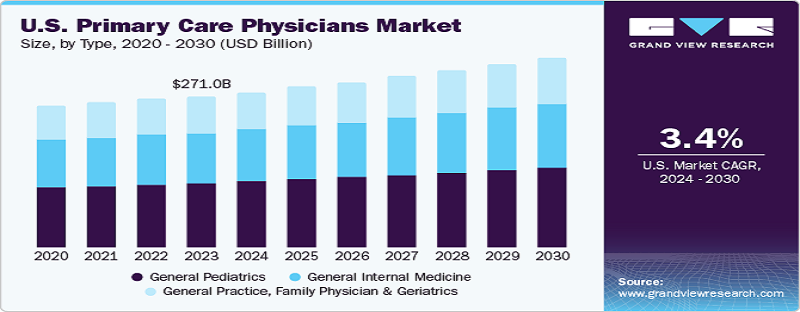
In the U.S., employed physicians have reported that salary-based compensation most commonly follows volume-based and mixed models. As per the study of 31 physician organizations in the U.S. published in JAMA Network in January 2022, for PCPs, the volume-based compensation model was the common base compensation incentive component, with around 26 physician organizations accounting for around 68.2% of total compensation.Programs developed by policymakers to deliver quality care by enhancing payment methods for financial incentives are expected to help physicians focus on value-based care rather than volume-based care. Moreover, patient outcomes as a measure of the quality of care are being incorporated into value-based payment models, such as incentive-based payment models, risk-bearing arrangements, and comprehensive primary care programs.In the U.S., PCPs mostly practice in independent or small healthcare settings; however, in recent years, many physicians are now working with large physician groups or hospitals. As per the Primary Care in the United States 2019 by Robert Graham Center (RGC), around 48% of PCPs are partial or full owners of the practice, and around 48% of these providers work for employed physicians. Out of all primary care providers working in non-physician-owned practices, around 50% are in insurers, HMOs, health plans, or corporate-owned practices, and around 47% are in community health, academic, or medical centers.