
Organising Committee Members
Speaker Details
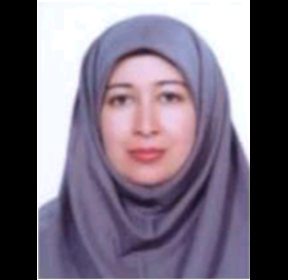
Dr. Bita Naseri
Dr. Bita Naseri, Fellow of Iranian Phytopathological Society, is currently serving as academic staff, Plant Protection Department, AREEO, Kermanshah. She obtained her Ph.D. from University of Adelaide, Australia. She has been associated with the development of two sainfoin varieties tolerant to powdery mildew, high forage yielding due to late flowering, with higher protein content and digestive quality. She has successfully integrated late-spring and shallow planting, using 0-50 kg/ha urea, weekly irrigations, rotation with wheat or barley, increasing soil organic matter to manage bean root rots. She has developed predicting models for wheat yellow rust and chickpea Ascochyta blight epidemics. She is well recognized for her 30 years contributions to epidemiology and sustainable management of over 50 pathogens infecting legumes, cereals, canola, olive, sugar beet, and sunflower. She has over 150 research publications as well as 350 peer reviews and editorial records, with being honored by Khwarizmi International Award, Top 2% highly cited scientist at Elsevier in 2022, and Best Researcher of Iranian Research Institute of Plant Protection in 2023.
Speaker Details
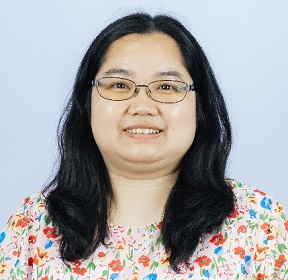
Asst. Prof. Dr. Krittika Kaewchumnong
Plant PhysiologyAsst. Prof. Dr. Krittika Kaewchumnong is a Lecturer in Plant Physiology in the Division of Biological Science, Faculty of Science, Prince of Songkla University, Hat Yai, Thailand. She holds a Ph.D. in Plant Science from the University of Aberdeen, UK, an M.Sc. in Plant Breeding and Biotechnology from the University of East Anglia, UK, and a B.Sc. in Biology from Prince of Songkla University, Thailand. Her academic and research expertise focuses on plant physiology, rice science, plant allelopathy, rice–weed interactions, and genetic diversity of rice, with particular interest in understanding the physiological and genetic mechanisms underlying rice allelopathy and its potential application for improving rice tolerance to weeds.
Dr. Kaewchumnong has developed an active research program investigating rice allelopathy, allelochemicals, plant–plant interactions, stress physiology, and rice genetic diversity. Her research examines how environmental factors including light, water, heat, and nutrient availability influence the growth and allelopathic activity of rice. She has also contributed to research on Striga-rice interactions, weedy rice diversity, invasive plant species, and the ecological and physiological effects of invasive plants. Her research has been supported by grants from the National Research Council of Thailand and the Plant Genetic Conservation Project under the Royal Initiative of Her Royal Highness Princess Maha Chakri Sirindhorn, covering projects on rice–weed interactions, allelochemicals, environmental stress responses, indigenous rice conservation, and genetic diversity.
Her scholarly contributions include research articles published in journals such as Plant Ecology, ScienceAsia, Flora, Weed Research, New Phytologist, and Songklanakarin Journal of Science and Technology, as well as conference proceedings in plant physiology, rice science, plant genetic diversity, and higher education. Her work includes studies on the effects of light and phosphorus deficiency on rice allelopathic activity, invasive plant phytotoxicity, rice cultivar susceptibility to Striga hermonthica, and genetic diversity of local and weedy rice. Through her research and teaching in Plant Physiology, Plant Science, Rice Biology, Allelopathy, Plant Stress Physiology, and Plant Genetic Resources, Dr. Krittika Kaewchumnong contributes to advancing sustainable crop production, rice improvement, weed management, and plant science research in Thailand and internationally.
Speaker Details
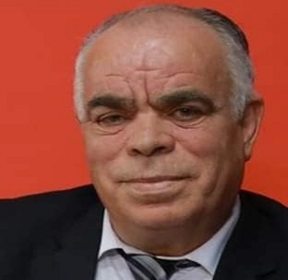
Professor Chedly Ben Ali Abdelly
Professor Chedly Ben Ali Abdelly is a distinguished Tunisian scientist and research leader with more than four decades of experience in plant science, biotechnology, and sustainable agriculture. He currently serves as Director General of the National Agency for the Promotion of Scientific Research (ANPR) and has previously held leadership positions at the Biotechnology Center of Borj Cédria, including Director General and Director of laboratories specializing in extremophile plants and plant adaptation to abiotic stresses.
His research focuses on extremophile plants, halophytes, plant responses to environmental stress, biosaline agriculture, plant biotechnology, and the sustainable use of plant biodiversity. Professor Abdelly has authored more than 450 peer-reviewed scientific publications, written a specialized book on salinity tolerance, holds three patents, and has supervised more than 100 PhD students and 37 Master's dissertations. His work has contributed significantly to research on climate change, water scarcity, soil salinity, and sustainable agriculture.
Professor Abdelly's scientific contributions have been recognized through several national and international distinctions, including the Presidential Award for Best Researcher in Biotechnology, the National Order of Merit for Science and Education, and the African Union's Kwame Nkrumah Continental Scientific Excellence Award. He is also an active member of the Tunisian Academy of Sciences, Letters and Arts and the African Academy of Sciences, and continues to contribute to scientific research, institutional development, and international collaboration.
Speaker Details
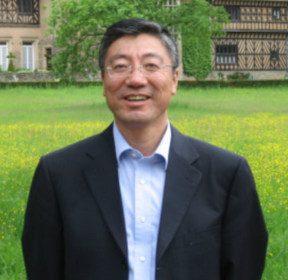
Dr. Qixin Sun
Dr. Qixin Sun is an esteemed academic leader, crop geneticist, and the current President of China Agricultural University (CAU). Born in August 1962, he launched his academic journey at Gansu Agricultural University before completing his master’s and doctoral degrees at Beijing Agricultural University. His administrative career spans over three decades of institutional leadership, highlighted by his tenure as President of Northwest A&F University (2011–2017) and his return to lead CAU in July 2017. In recognition of his foundational contributions to engineering and agrotechnology, Dr. Sun was elected as an academician to the prestigious Chinese Academy of Engineering (CAE).
As a globally recognized scientist, Dr. Sun serves as the Director of the CAU Wheat Genetics and Genomics Center, where his research focuses on wheat heterosis, functional genomics, and molecular breeding. Alongside a prolific team of co-authors, his laboratory targets critical agronomic traits to enhance crop resilience against climate-driven abiotic stress factors like heat and drought. His research contributions, heavily logged across platforms like Research.com and ResearchGate, directly advance Next-Gen "Breeding 5.0" methodologies, providing structural genetic frameworks designed to guarantee food security.
Beyond institutional governance and lab science, Dr. Sun is a primary advocate for international agrifood innovation, sustainable development, and multi-lateral collaboration. He spearheads major cross-border initiatives and regularly addresses prominent international forums, such as the World Agrifood Innovation Conference (WAFI), to advocate for climate-smart agriculture and technology transfers. By translating high-level agricultural biotechnology into active global policy, Dr. Sun continues to shape international agrifood infrastructure, sustainable farming models, and higher education systems worldwide.
Speaker Details

Dr. K. B. Rameshkumar
Dr. Rameshkumar K. B is a Senior Principal Scientist and Head of the Phytochemistry and Phytopharmacology Division at the Jawaharlal Nehru Tropical Botanic Garden and Research Institute (JNTBGRI), Thiruvananthapuram, Kerala. He holds an M.Sc. in Chemistry from St. Thomas College, Thrissur, and a Ph.D. in Chemistry from the University of Kerala, specializing in the phytochemistry of Indian medicinal plants.
With over 28 years of research experience, his expertise encompasses natural product extraction, isolation and structural elucidation, essential and fixed oils, mass spectrometry, chemotaxonomy, chemical ecology, fragrances, and herbal technology. He has contributed to research projects funded by DBT, DST, BARC, KSBB and KSCSTE, with 68 peer-reviewed publications, 5 book chapters, 3 books, and an H-index of 24.
He has supervised 7 Ph.D. scholars and 60 postgraduate projects, with 4 Ph.D. scholars currently pursuing research. His work includes the discovery of novel plant species and natural molecules, and he has delivered 130+ invited lectures in India and abroad. He has received several recognitions, including the Fellowship of the Kerala Academy of Sciences, Young Scientist Award of the Kerala Science Congress, K. S. Manilal Award, and Dr. P. D. Sethi Award.
Dr. Rameshkumar has also held various academic, research advisory, editorial, and professional society positions and has extensive experience in organizing national and international conferences, seminars, and workshops. His research contributions have significantly advanced phytochemistry, medicinal plant research, natural product chemistry, and plant resource utilization.